

who we are.
our values.
We strive to foster an environment where all individuals—each bringing their unique backgrounds, experiences, lived realities, and aspirations—feel valued, respected, and supported. To guide our work and relationships, both within our group and with our partners, we uphold the following core values:
humility.
Humility means recognizing the limits of our knowledge and being open to learning from others, whether they are colleagues, partners, or community members. When working across knowledge systems and lived experiences, humility encourages us to approach every interaction as an opportunity to listen deeply, acknowledge expertise outside academia, and embrace collaborative solutions.
accountability.
Accountability is central to building trust in research and partnerships. We take responsibility for the impacts of our work, the commitments we make, and the relationships we build. This includes being transparent about our goals, ensuring our research is ethically sound and accessible, and following through on promises to collaborators and communities.
respect.
Respect underpins all aspects of our work. It means valuing the voices, perspectives, and rights of everyone involved, whether academic peers, Indigenous Knowledge holders, land users, or others that contribute to our shared goals. Respecting different knowledge systems and lived experiences ensures that our research is not only scientifically rigorous but also culturally and socially meaningful.
Together, these values shape the way we approach wildlife ecology and conservation, striving for research that is inclusive, ethical, and impactful for all involved.
our name.
WWALK is a lab where diverse ways of knowing converge to address pressing challenges in wildlife ecology and conservation. Grounded in scientific rigor and collaboration, our work is powered by community-driven approaches that weave together Western science, Indigenous Knowledge, and lived experience. We are committed to co-producing knowledge that not only supports effective wildlife management and ecological resilience but also uplifts cultural sustainability and serves the needs of diverse communities.
The name WWALK embodies our mission and values. It stands for Weaving Wildlife and Land-based Knowledges, a reflection of our core belief in the transformative power of bringing multiple perspectives together. Beyond the acronym, "walk" holds a deeper resonance—it represents the journey we take alongside our partners, communities, and collaborators. Walking symbolizes deliberate, grounded movement, an act of connection and reciprocity with the land and all who call it home. It’s a reminder to approach our work with humility, respect, and care as we navigate the landscapes and relationships that shape our research.
At its heart, WWALK is built on the understanding that conservation is about more than ecosystems and species—it’s about relationships. Relationships between people, wildlife, and the lands we share. Relationships between knowledge systems, worldviews, and lived experiences. By honoring these connections, we strive to create research that is not only scientifically impactful but also deeply meaningful, contributing to a future where conservation is inclusive, ethical, and rooted in reciprocity.
principal investigator.

Dr. Allyson Menzies (she.her)
Ally, of mixed Métis and settler descent, was born on Treaty 2 territory, where her connection to the natural world first took root. Her love for the land grew through childhood adventures on the prairies: camping and fishing with her dad and siblings, swimming with cousins, chasing geese through wheat fields, and experiencing prairie sunsets and thunderstorms. These experiences sparked a deep curiosity and appreciation for nature that has grown into a lifelong commitment to understanding and conserving the natural world.
Her academic path began on Treaty 1 territory at the University of Winnipeg, where she studied the physiology and behaviour of hibernating bats. She then continued her journey at McGill University (Kanien’kehá:ka territory) for her PhD, where she focused on the winter ecophysiology of lynx, hares, and squirrels in the Yukon. During her postdoctoral work at the University of Guelph (Dish with One Spoon Treaty and Treaty 3 territory), Ally made a deliberate pivot in her research to focus on understanding and learning from Indigenous environmental values and exploring how they can be better supported and uplifted in environmental monitoring and research; a pursuit that remains central to her work today.
Now, Ally brings her ecological expertise, interdisciplinary approaches, and commitment to bridging people and worldviews into her research, teaching, and mentorship. She is passionate about advancing culturally relevant and impactful conservation by weaving ecological science with Indigenous methodologies, fostering connections to Land, and training the next generation of skilled and socially conscious scientists.
team.
Photographs provided by the individuals pictured.

Administrative and Research Support
Claire Kemp (she.her)
Claire is a settler of Polish and Scottish ancestry living within the Dish With One Spoon Treaty Lands of the Anishinaabeg and Haudenosaunee, in Guelph, Ontario. Her love for the Land has led her to ecological research with specific interest in community-engaged practice and knowledge mobilization. She is passionate about taking a values-based approach to research, working closely with community partners to ensure their priorities, knowledge, and values are reflected in a good way.
Claire is currently the project manager for the Moose Alliance: Listening to Mooz/Moswa Project, which brings together Indigenous Nations from across both Manitoba and Ontario to better understand and investigate community moose concerns. She is based at the University of Guelph with Dr. Jesse Popp.

Analytical and Research Support
Dr. Bella Richmond (they.them)
Bella is a settler living in Tiohtiá:ke, the unceded lands of the Kanien’kehá:ka Nation. They love all forms of nature, and spent their PhD looking at the benefits of nature in cities. Bella loves open-source software, interdisciplinary research, and causal inference. They joined the WWALK lab to work in a support role, where they are excited to use both quantitative and qualitative skills to help realize all of the awesome research being done by other members of the lab.

Postdoctoral Fellow
Dr. Mathilde Poirier (elle.she)
Mathilde is from Nitakinan, Anicinape Aki (the traditional territory of the Anishinaabe Nation) in Abitibi, Quebec. Passionate about northern environments, she specialized in winter ecology and the impact of snow conditions on wildlife during her PhD. For her postdoctoral research, Mathilde is co-developing research projects with the Cree community of Waswanipi to study the impact of climate change and forest fires on wildlife. Her research practice is grounded in the weaving of Indigenous and scientific knowledge systems, with the aim of contributing to the reflection and advancement of these approaches in terrestrial ecology.
Mathilde is funded by a Weston Family Postdoctoral Fellowship.

Postdoctoral Fellow
Dr. Shelby Bohn (she.they)
Shelby is a settler from Treaty 1 territory and the Red River Metis homeland. They grew up between the Assiniboine and La Salle Rivers. Shelby is a transdisciplinary researcher interested in the ways that illustration and visual communication can help build stronger collaborations, and, ultimately, increase the impact and efficacy of applied conservation research.
Learn more: https://www.shelbybohn.com/

Analytical Support
Jack Hendrix (they.them)
Jack is a settler of Dutch descent who grew up in the traditional territories of the Anishnaabeg in what is now known as southern Ontario. A lover of green places and nature in all its forms, their passion for boreal and northern species grew from their Master’s research in Champagne-Aishihik territory in southwest Yukon, to their PhD work in Ktaqmkuk (Newfoundland). They are dedicated to making science more inclusive for fellow queer folks, and also to using their privilege to make research more welcoming for other disenfranchised groups. They have joined WWALK in an consultatory role to pass on the socio-spatial analytical skills they developed working with GPS collar and satellite data while studying caribou social and spatial behaviour.

PhD Student
Brendan Carswell (he.him)
Brendan grew up on the traditional territories of the Gwa’sala-‘Nakwaxda’xw and Quatsino First Nations. Consequently, Brendan’s passion for wildlife ecology developed through exploring the diverse lands currently known as British Columbia. For his PhD research, Brendan is working with the Opaskwayak Cree Nation investigating the causes and consequences - both biological and cultural - of large scale moose declines on OCN territory.
Brendan is funded by an NSERC CGS-D, a Killam Doctoral Fellowship, and a U of C Doctoral Recruitment Award.

PhD Student
Regan Martin (she.her)
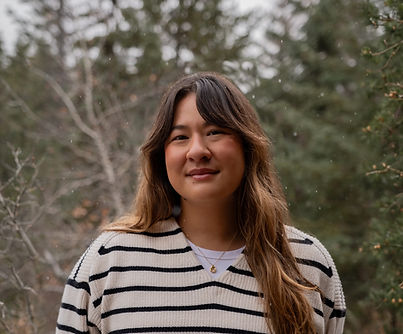
Regan grew up on the traditional lands of the Anishinaabek, Haudenosaunee, Lūnaapéewak, and Attawandaron peoples in southwestern Ontario, and spent her childhood camping and exploring the outdoors. These experiences shaped her love for wildlife and the environment from a young age. Her doctoral research (starting Sept 2026) will contribute to a collaborative coastal wildlife monitoring project in Eeyou Istchee, supporting community-based biodiversity monitoring and the study of biocultural connections across changing coastal landscapes.
PhD Student
Gillian Chow-Fraser (she.her)
Gillian grew up in the traditional territory of the Haudenosaunee and Anishnaabeg in southern Ontario. The daughter of two freshwater ecologists, she was taught the value of curiosity and conservation of nature from a young age.
Her PhD project will explore ecological and cultural restoration of wood bison in northern Canada, a species once on the brink of extinction. Her research aims to enhance Indigenous-led conservation of wood bison and apply learnings at a broader scale to improve long-term resilience of the species.
Gillian is supported by a NSERC CGS-D and a WCS Canada Weston Family Boreal Research Fellowship.
_jpg.jpeg)
PhD Intern and Friend of the Lab
Jasmine Veitch (she.her)
Jasmine grew up exploring the natural world within the traditional territories of Omàmìwininìwag (Algonquin) and Anishinabewaki ᐊᓂᔑᓈᐯᐗᑭ, observing the flora and fauna of its boreal forests. Eventually, this path led to her discovering a lifelong passion for the tiny, invisible beings that shape our natural world (macroparasites, viruses, microbes). Her work has focused on these ‘hidden’ components of ecosystems that underlie the more observable beauty at the surface.
Jasmine is participating in WWALK research activities as part of her PhD program specialization (wildlife health and ecology in the veterinary medicine program at U of C). She is supporting work of graduate student research projects within WWALK and co-developing Indigenous Knowledge course content.

MSc Student
Heather Tanner (she.her)
Heather is an Anishinaabekwe with Métis and Dutch roots and is a member of Gambler First Nation (Treaty 4). For her research, she will be partnering with Wuskwi Sipihk First Nation (Treaty 4) to co-develop a moose monitoring and research program on their ancestral lands. Her Masters will focus on understanding moose-habitat relationships and the impacts of declining moose populations on the people of WSFN. Through collaboration and weaving knowledge systems, Heather hopes to help advance community conservation initiatives rooted in respect and reciprocity and further support community-led moose research, monitoring and management.

MSc Student
Grace Sullivan (she.her)
Grace is from the Punamu’kwati’jk area of Mi'kma'ki on Canada’s east coast. Her passion for conservation and wildlife ecology stems from a love for the environment around her and spending a lot of time outside. During Grace’s undergraduate studies she assessed the impact of avian influenza virus on bald eagles in Unama’ki (Cape Breton Island). Her graduate studies are focused on fostering the co-governance of moose in Unama’ki while investigating the impact of brain worm (Parelaphostrongylus tenuis) on Cape Breton Island’s moose population.

MSc Student
Amanda MacDonald (she.her)
Hailing from the Porcupine Hills of eastern Ksahkominoon (Treaty 7), the traditional territory of the Nitistapii, Amanda has had the privilege of exploring the grasslands region throughout the northern Great Plains from a young age. This exploration lead to an enduring curiosity for grassland ecosystems. Amanda’s Master’s research focuses on the movement ecology of saokiawakaasi (pronghorn, Antilocapra americana) including migration strategy and influences. Ultimately, Amanda is driven by her resolution to provide meaningful contributions to initiatives focused on maintaining sustainable coexistence between humans and the ecosystems we inhabit.

MSc Student
Ben Charbonneau (he.him)
Ben comes from both Métis and settler descent. He grew up on the west coast of British Columbia residing on the traditional territory of the Katzie, Kwantlen, Matsqui, and Semiahmoo First Nations. Ben has always been fascinated by animals and his master's research will focus on monitoring moose populations in the ancestral territory of the Misipawistik Cree Nation. Ben aims to create a research space that is both culturally relevant and respectful by weaving knowledge systems to better understand the threats to moose populations and how we can progress to a more sustainable future for moose.
Ben is partially funded by a NSERC CGS-M and a U of C Indigenous Graduate Student Award.

MSc Student
Makenna Kleiner (she.her)
Makenna grew up in the traditional territories of the Niitsitapi and the people of Treaty 7, where her passion for biology, wildlife and conservation blossomed. Makenna’s master’s research will focus on the effects of anthropogenic development, including both renewable energy development and linear features, on resource selection patterns of saokiawakaasi (pronghorn, Antilocapra americana). Makenna hopes to become a wildlife biologist to advocates for the land and the wildlife we live alongside.

MSc Student
Kate Marouelli (she.her)
Kate grew up in in Treaty 6 Territory, where her passion for wildlife ecology and conservation developed at a young age through camping and hiking across Alberta. During her undergraduate studies, Kate investigated the how peatland permafrost thaw affects water quality and greenhouse gas emissions within Treaty 8 territory. Through this work, she developed a passion for community-led research. For her master’s project, Kate is partnering with Swan River First Nation to investigate the changes in Arctic grayling populations and identify barriers to their movement within the Swan River watershed.

MSc Student
Kayley Breslin (she.her)
Kayley grew up in the traditional territory of the Anishinaabeg and Haudenosaunee in Vaughan, Ontario. Her passion for nature grew through exploring the outdoors at every opportunity. Kayley completed an undergraduate degree in Wildlife Biology and Conservation at the University of Guelph (Dish with One Spoon Treaty and Treaty 3 territory), where her undergraduate research sparked her commitment to human-wildlife conflict mitigation.
For her Master's research, Kayley is investigating the movement ecology of saokiawakaasi (pronghorn, Antilocapra americana) across busy highway corridors. Her work focuses on identifying the factors that influence successful versus unsuccessful road crossings in high-collision areas, with the goal of supporting effective mitigation and promoting sustainable coexistence.
Kayley is supported by an NSERC CGS-M.
past team members.

MSc Student
Michelle Beltran (she.her.hers)
Michelle was an MSc student at the University of Guelph co-supervised by Dr. Jesse Popp working on an Indigenous-led bat monitoring project. She graduated in August 2025.